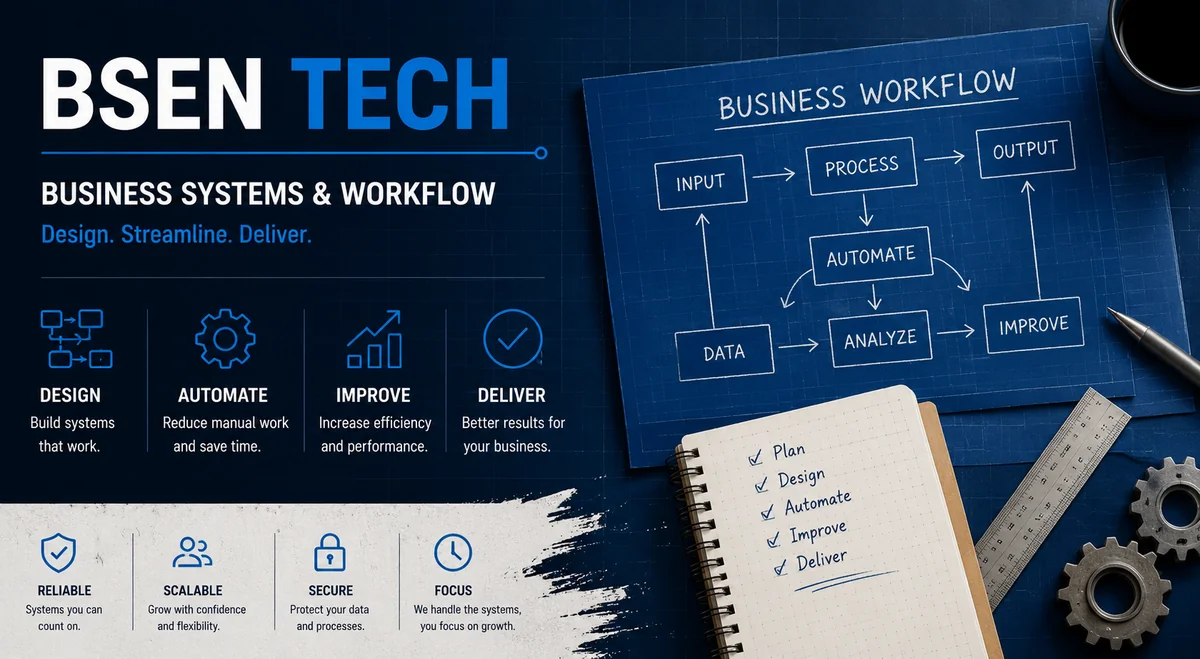
A CRM can contain thousands of fields and still tell management very little about what to change. The useful feedback loop begins when operational data is tied to a decision: which leads need attention, why opportunities stall, where customers experience friction or which process deserves improvement. The loop is complete only when the resulting decision changes the way work is done and the CRM then shows whether that change had the intended effect.
Begin with a management question, not a dashboard
Ask what decision the business is trying to make and what evidence would genuinely change that decision. This prevents teams from collecting and displaying metrics simply because the CRM can produce them.
A focused question also makes data-quality requirements clearer. If ownership and next-action dates drive a sales decision, those fields deserve more attention than information nobody uses.
Trace each important measure back to operational behaviour
Understand how the data is created during ordinary work. A stage field may look objective while different salespeople interpret it differently.
Define the business event behind important statuses and measures. Better definitions make reporting more comparable and reduce the temptation to repair inconsistent data manually before every review.
Combine structured CRM data with human context
Numbers can show where something is happening; conversations and notes may explain why. A falling progression rate, for example, does not diagnose its own cause.
Use CRM evidence to identify where investigation is worthwhile, then bring in the people closest to the work. Management judgement should be informed by data rather than replaced by it.
Turn findings into an explicit operational change
If a review identifies a problem, record what the organisation is changing, who owns it and what evidence will indicate whether the change helped. Otherwise the insight remains a discussion point that disappears after the meeting.
The action might alter qualification guidance, routing, follow-up, data capture or another part of the workflow. Keep the intervention specific enough to evaluate.
Reflect process changes back into the CRM
When the business changes the way it works, the CRM configuration and guidance may need to change with it. Old fields, stages and automation can preserve the previous process long after managers believe it has been replaced.
Treat system configuration as part of operational change. Users should not have to choose between following the new process and keeping the CRM tidy.
Observe the result without claiming false causation
After a change, review the same relevant evidence and compare what staff are experiencing. Improvement or deterioration may have several causes, so avoid declaring success from one movement in a dashboard.
Use the data as a prompt for further investigation and retain enough context to understand other changes occurring at the same time.
Make data-quality failures part of the feedback loop
Missing fields, excessive 'other' categories and frequent manual corrections are operational signals in their own right. They can show that the process is unclear, the interface is burdensome or the data being requested is not useful.
Instead of repeatedly reminding users to enter better data, investigate why the system and the work have diverged.
Give recurring reviews a clear owner and purpose
A feedback loop needs cadence, but the appropriate frequency depends on the decision and pace of the business. Define who reviews the evidence and what decisions that forum is authorised to make.
Retire reports that no longer trigger useful action. Reporting should earn its place by improving understanding or decisions.
Connect management information to the systems where work happens
A useful CRM feedback loop is therefore not 'collect, report, repeat'. It is evidence, interpretation, decision, operational change and fresh evidence. When those stages stay connected, CRM data becomes part of how the business learns rather than a record assembled mainly for retrospective reporting.