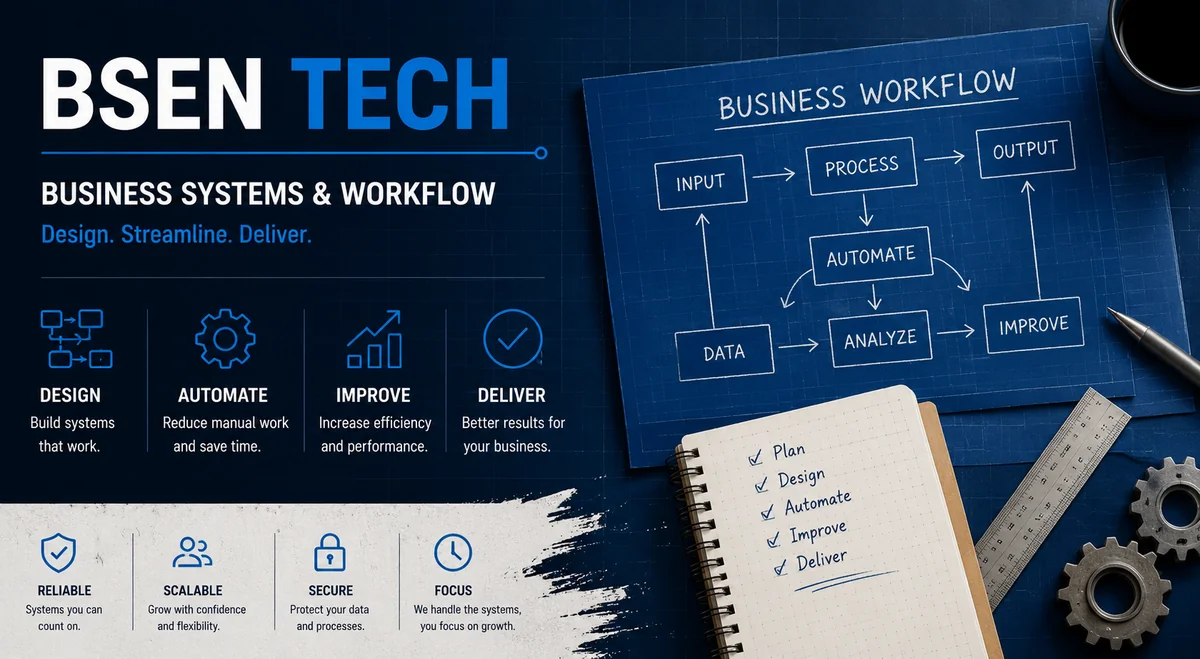
Customer support software is easiest to buy when the team already understands the work it expects the product to organise. Without that map, feature lists become a substitute for requirements. The business may buy ticket routing, automation and reporting before it has agreed who should own an enquiry, what information is needed or where an escalation belongs. Mapping the workflow first turns software selection into a test of fit rather than a search for the most impressive platform.
Begin with real support requests
Choose a representative set of recent enquiries rather than designing an idealised process from memory. Include routine questions, difficult cases, complaints, requests that changed owner and work that became stuck.
Trace what happened from arrival to resolution. Note the systems used, information gathered, people involved and points where the customer had to wait or repeat context. Actual cases expose informal steps that a process diagram created in a meeting can miss.
Map entry points before queues
List where support work arrives: email, phone, web forms, account teams or other channels used by the business. Identify whether these routes create one shared view or separate streams that staff reconcile manually.
This matters when assessing software because omnichannel claims are less useful than understanding how the organisation needs each entry point to create, update or relate to a customer record.
Mark ownership changes explicitly
For each journey, show who owns the next action and what causes ownership to change. Pay particular attention to transfers between frontline support, specialists, finance, delivery or management.
Ask what information the receiving person needs. A workflow that merely forwards a message is not a successful handover if the new owner must reconstruct the issue from the beginning.
Separate standard work from judgement
Identify steps that follow dependable rules and those requiring expertise, discretion or sensitive customer handling. This distinction helps the business decide where software automation may be useful and where it should support a person rather than replace a decision.
It also improves product demonstrations. Instead of asking whether a platform ‘has automation’, the team can ask a supplier to show how one specific stable rule and one genuine exception would be handled.
Document the information each step depends on
Support may require customer history, orders, service records, product information or internal approvals held outside the proposed helpdesk. Mark those dependencies on the workflow.
This creates an integration requirement grounded in work. The business can then distinguish information that needs to be visible in the support process from data that can remain in its authoritative source system.
Find failure points before automating them
Highlight lost requests, repeated data entry, unclear escalation, duplicate records and stages that depend on somebody remembering to chase. Decide whether each problem is caused by missing software, unclear responsibility or a weak underlying process.
Technology can help with the first category and sometimes expose the others. It cannot make an unresolved ownership decision disappear. Automating a confused workflow can simply make confusion move faster.
Turn the map into demonstration scenarios
Give shortlisted suppliers the same representative journeys and ask them to show the complete route. Include an exception, a reassignment and a case needing information from another system.
Watch what the user has to do as well as what the software can technically do. Count unnecessary hand-offs, duplicate entry and configuration assumptions. This produces more useful evidence than allowing each supplier to demonstrate only its strongest features.
Keep the map after the purchase
The workflow remains valuable during configuration, training and later improvement. It provides a reference for why queues, fields, integrations and rules exist, making it easier to challenge complexity that creeps into the system.
Customer support software should implement a service model the business understands. By mapping real journeys, ownership, information and exceptions first, a team can buy the capabilities its customers and staff actually need rather than discovering its requirements after the contract is signed.